
In this Article
Daylight saving starts at 2:00am on Sunday, 4 October 2026, when clocks move forward one hour to 3:00am (AEDT). It applies in New South Wales, Victoria, South Australia, Tasmania and the ACT. Queensland, Western Australia and the Northern Territory do not observe the change.
Once DST begins, Sydney, Melbourne, Adelaide, Hobart and Canberra sit an hour ahead of Brisbane, an hour and a half ahead of Darwin, and two hours ahead of Perth - worth double-checking if you're travelling or booking calls across states.
It's that time of year again, clocks across most of Australia will spring forward and evenings will start staying lighter for longer. Meanwhile, most regions in the Northern Hemisphere are just coming off daylight saving time and heading into shorter days.
But what exactly is Daylight Saving Time (DST), why was it introduced, which countries use it, and how does it affect your travels? Here's all you need to know about DST in Australia, including how it can help you travel in 2026 and beyond.
When Does Daylight Saving Time Start Each Year?
In Australia, Daylight Saving Time begins at 2:00am (AEST) on the first Sunday in October and ends at 3:00am (AEDT) on the first Sunday in April. This means the clocks move forward one hour in October and backward one hour in April, giving us an extra hour of daylight in the evening.
Each year, the switch means clocks go forward from 2:00am to 3:00am on the day, so you lose an hour of sleep that night. The date often lands on or near a long weekend in several states, so it's worth double-checking flight times, tours and bookings if you're travelling that weekend, see the table below for the exact date this year.
However, these dates only apply to the states of New South Wales, Victoria, South Australia, the Australian Capital Territory and Tasmania, not to Queensland, the Northern Territory, or Western Australia, so be sure to check local time differences when travelling between states.
Daylight Saving Time Changes in Australia
Use the table below to check the exact date and time of the next clock change, and plan ahead for future years.
| Date | Year | Change | Time | Details |
|---|---|---|---|---|
| 5 Apr | 2026 | Back 1 hour | 02:59 ➜ 02:00 | DST End |
| 4 Oct | 2026 | Forward 1 hour | 01:59 ➜ 03:00 | DST Start |
| 4 Apr | 2027 | Back 1 hour | 02:59 ➜ 02:00 | DST End |
| 3 Oct | 2027 | Forward 1 hour | 01:59 ➜ 03:00 | DST Start |
| 2 Apr | 2028 | Back 1 hour | 02:59 ➜ 02:00 | DST End |
| 1 Oct | 2028 | Forward 1 hour | 01:59 ➜ 03:00 | DST Start |
| 1 Apr | 2029 | Back 1 hour | 02:59 ➜ 02:00 | DST End |
| 7 Oct | 2029 | Forward 1 hour | 01:59 ➜ 03:00 | DST Start |
| 7 Apr | 2030 | Back 1 hour | 02:59 ➜ 02:00 | DST End |
| 6 Oct | 2030 | Forward 1 hour | 01:59 ➜ 03:00 | DST Start |
| 6 Apr | 2031 | Back 1 hour | 02:59 ➜ 02:00 | DST End |
States & Territories in Australia that do not observe Daylight Saving Time: Northern Territory, Queensland & Western Australia.
Do we gain or lose an hour when daylight saving time starts?
If you live in an Australian state or territory that observes daylight saving time (DST), you lose an hour when daylight saving time starts.
Each year, at 2:00am (local standard time) on the day DST starts, clocks jump forward one hour to 3:00am (local daylight time), that hour simply disappears from the night, so you lose an hour of sleep.
Most people adjust within a couple of days; going to bed a little earlier in the run-up and getting some morning sunlight that first week both help.
As spring rolls on, the days keep getting longer, and once daylight saving starts, that extra evening light becomes even more noticeable. Australia's summer solstice (the longest day of the year) falls around 21 December each year. The farther south you live, the more daylight you gain: Hobart, for example, gets close to 15 hours of daylight around the summer solstice.
Do we gain or lose an hour when daylight saving time ends?
Good news: when daylight saving ends, you typically gain an extra hour of sleep, because the clocks "fall back" by one hour.
Each year, at 3:00am (local daylight time) on the day DST ends, clocks are turned back one hour to 2:00am (local standard time), meaning that hour repeats.
It's often the easier clock change, especially if you're not a morning person, because wake-ups can feel a little less brutal for a few days.
As we move deeper into autumn and toward winter, the days keep getting shorter. Australia's winter solstice (the shortest day of the year) falls around 21 June each year.
And yes, the farther south you live, the shorter the daylight. For example, Hobart drops to roughly 9 hours of daylight around the winter solstice.
Is it ‘daylight saving’ or ‘daylight savings’?
Although you’ll hear many people in Australia say “daylight savings”, the correct term is “daylight saving (time)”, without the “s”.
That’s because the purpose of the clock change is saving daylight (shifting more daylight into the evening), not “savings” daylight.
What is Daylight Saving and Why Do We Use It?
The main idea is to take advantage of the longer summer days by extending daylight into the evening, reducing the need for artificial lighting.
Nowadays, it’s about enjoying more daylight for outdoor activities and syncing with our natural body clock, known as the circadian rhythm, which is influenced by sunlight.
In Australia, this means you can enjoy stunning coastline drives to late-afternoon waves at Bondi Beach.
A Quick History of Daylight Saving Time
Back in the day, towns would set their watches to an official town clock, hence London’s Big Ben. As fast modes of transportation between different countries were introduced, having a world standard system of keeping time became extremely vital.
Enter Sir Sandford Fleming, a Canadian who proposed the idea of 24 time zones around the world. He suggested that every 15 degrees of longitude would represent one hour apart, bringing a bit of order to worldwide timekeeping.
Then, in the early 20th century, we decided to confuse things again when countries began introducing what would become known as daylight saving time. It was introduced to conserve energy and make the most out of each day’s sunlight hours.
In spring, clocks are pushed forward one hour until autumn, when they are then pushed back one hour. That means an hour of extra sleep in autumn when we switch the clocks and one hour less in the spring.
Today, only about 70 countries use DST, but it continues to affect well over a billion people every year.

The Beginnings of Daylight Saving Time
It is often thought that Benjamin Franklin, one of the United States’ Founding Fathers, originated the idea of DST. However, Franklin merely joked that Parisians needed to get out of bed earlier to extend the life of candles.
The idea for DST emerged around 1895, proposed by George Hudson, a British-born New Zealand entomologist. Hudson suggested DST so he could have more daylight hours to hunt bugs after work during the summer months. Originally, he proposed a two-hour shift in time.
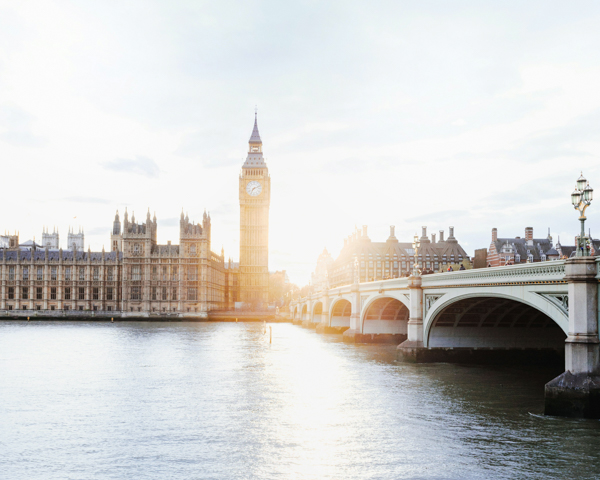
A few years later, William Willett, the great-great-grandfather of Chris Martin (lead singer of the British rock band Coldplay), proposed the idea of DST to the English Parliament. Willett proposed making 8-time switches per year in 20-minute increments instead of an hour. Despite support from notable figures such as Winston Churchill and Sir Arthur Conan Doyle, he would die before DST would officially be introduced.
Germany is generally credited as the first nation to fully enact daylight saving time during WWI, around mid-1916, to save fuel and energy. Following Germany’s lead, England and the United States soon followed suit to avoid being at a disadvantage.
Interestingly, some Canadians were the first to change their clocks according to the seasons. Residents in Ontario began doing so in 1905, followed by towns in Saskatchewan and Manitoba, all before Germany’s official adoption of DST.
DST Around the World Today
Today, about 70 countries use Daylight Saving Time in at least some regions within their borders. However, this is considered a minority decision in terms of the world’s population, when you consider countries like China, India, and Japan do not observe it.
Equatorial vs. Non-Equatorial Countries
- Near the Equator: Countries close to the equator, where daylight hours are consistent year-round, shy away from DST. Daylight hours are pretty much consistent all year round near the equator, so it doesn’t make much sense to have DST.
- Further from the Equator: Countries further from the equator, which experience significant seasonal changes in daylight hours, are more likely to implement DST.
Northern Hemisphere
- Countries Observing DST: United States, Canada, United Kingdom, and the European Union.
- Exceptions: In the U.S., states like Arizona and Hawaii do not observe DST. Arizona opts out due to its extremely hot temperatures, preferring earlier sunsets for cooler evenings.
Southern Hemisphere
- Countries Observing DST: Brazil, Chile, Australia, Fiji, and New Zealand.
- Non-Observing Regions: Most countries in South and Central America, Africa, and Southeast Asia.
Regional Variations
Even within countries that observe DST, not all regions may follow it. Some states, such as Florida and California, are pushing for DST to be in place year-round.
What is daylight saving in Australia?
Australia first implemented DST back in 1917 during World War I to save energy, but abandoned it shortly after the war. It resurfaced for a few years during World War II before it once again faded away post-war.
In the 1960s, Tasmania would then make a big push for DST as a way to save energy and water. By 1972, other states followed suit, except for Queensland, Western Australia, and the Northern Territory, which still don’t currently observe the time switch.
For the rest of the states that do observe DST, clocks are set forward by 1 hour on the first Sunday in October and turned back on the first Sunday in April each year.
How Does Daylight Saving Time Affect Travel?
Daylight Saving Time impacts flights, trains, schedules, and other travel arrangements, especially if you're travelling between states that observe DST and those that don’t, such as Queensland or Western Australia.
Always double-check departure and arrival times around the start and end of DST to avoid confusion.

Why Daylight Saving Is a Perfect Excuse to Travel?
With longer daylight hours during DST, you’ll have even more time to explore Australia's stunning landscapes, from the iconic Sydney Harbour to the Great Ocean Road.
Imagine going for a late afternoon surf at Manly Beach, followed by a sunset stroll along Shelly Beach. With DST in full swing, you'll have plenty of daylight hours left to soak in every bit of your trip.
If you’re travelling during busy periods or across time zones, disruptions can happen. Travel insurance may help with some costs in certain situations, depending on the cover selected. If you’re considering InsureandGo Australia travel insurance, refer to the relevant Policy Wording and Financial Services Guide (PDS) available to check the full details of the benefits, terms and conditions, limits, sub-limits and exclusions that may apply, and consider the PDS in light of your personal circumstances, prior to making any decision to acquire the product.
Does Daylight Saving Time Affect My Sleep?
The start of Daylight Saving Time can mean one less hour of sleep, but it’s nothing a good cup of coffee, tea, or matcha can’t fix! After a day or two, most people adjust naturally. The real benefit comes in autumn when clocks go back, and you can catch that extra hour of rest.
If you’re an early bird or a night owl, DST ensures that your activities align with the sunlight, giving you more time to be out and about.
Daylight Saving Around the World
While Australia enjoys the benefits of DST, not all countries do. Places like China, India, and Japan don’t observe Daylight Saving Time at all. In contrast, New Zealand, the U.S., and Europe are big participants.
So, if you’re jet-setting to multiple destinations, be sure to check whether your new time zone follows DST or not. It’s one of those small details that can make a big difference when planning your overseas adventure!
It is important to check the appropriate authority for the most up-to-date travel requirements.